
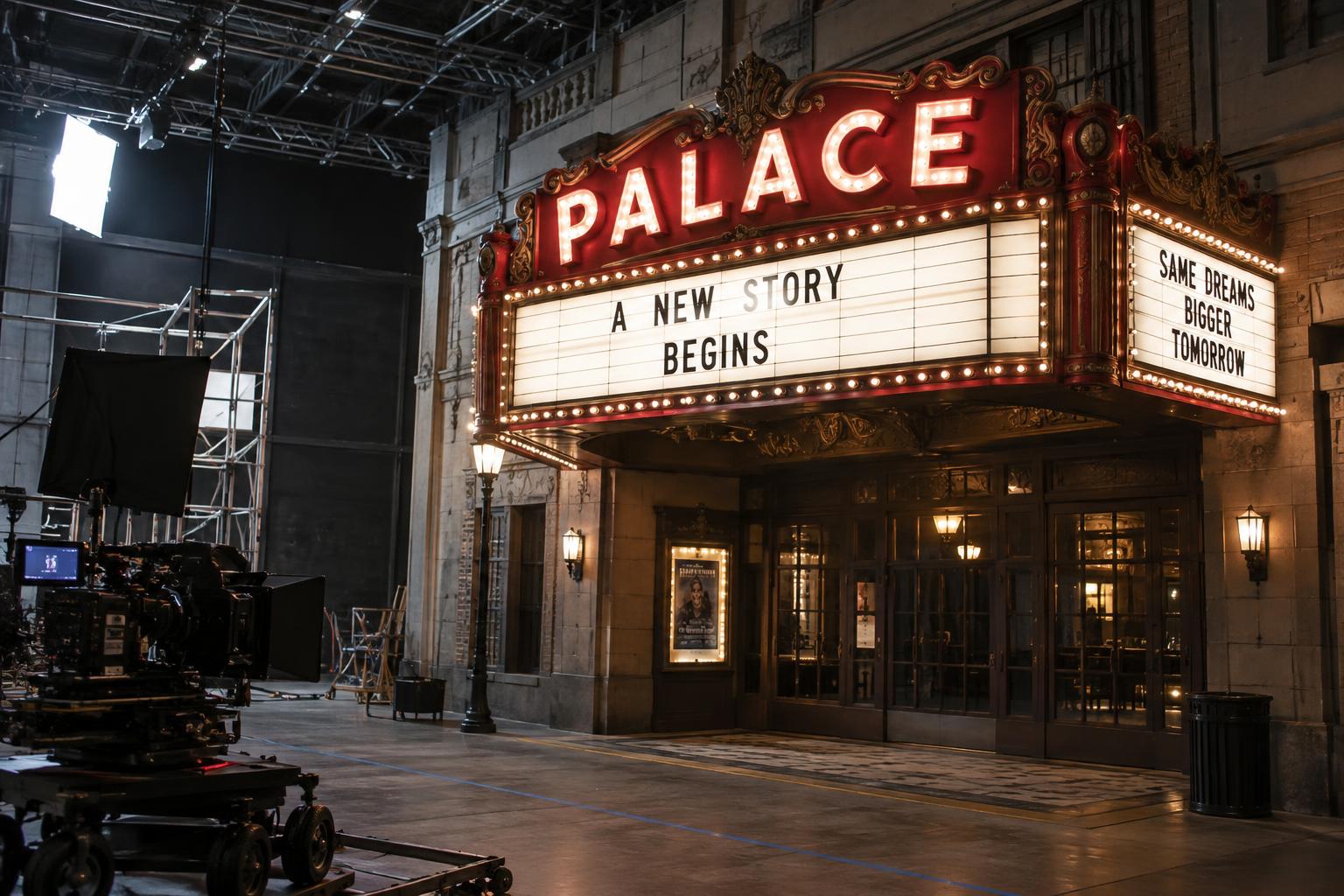
 Set identities & sign propsBelievable detail for the camera.
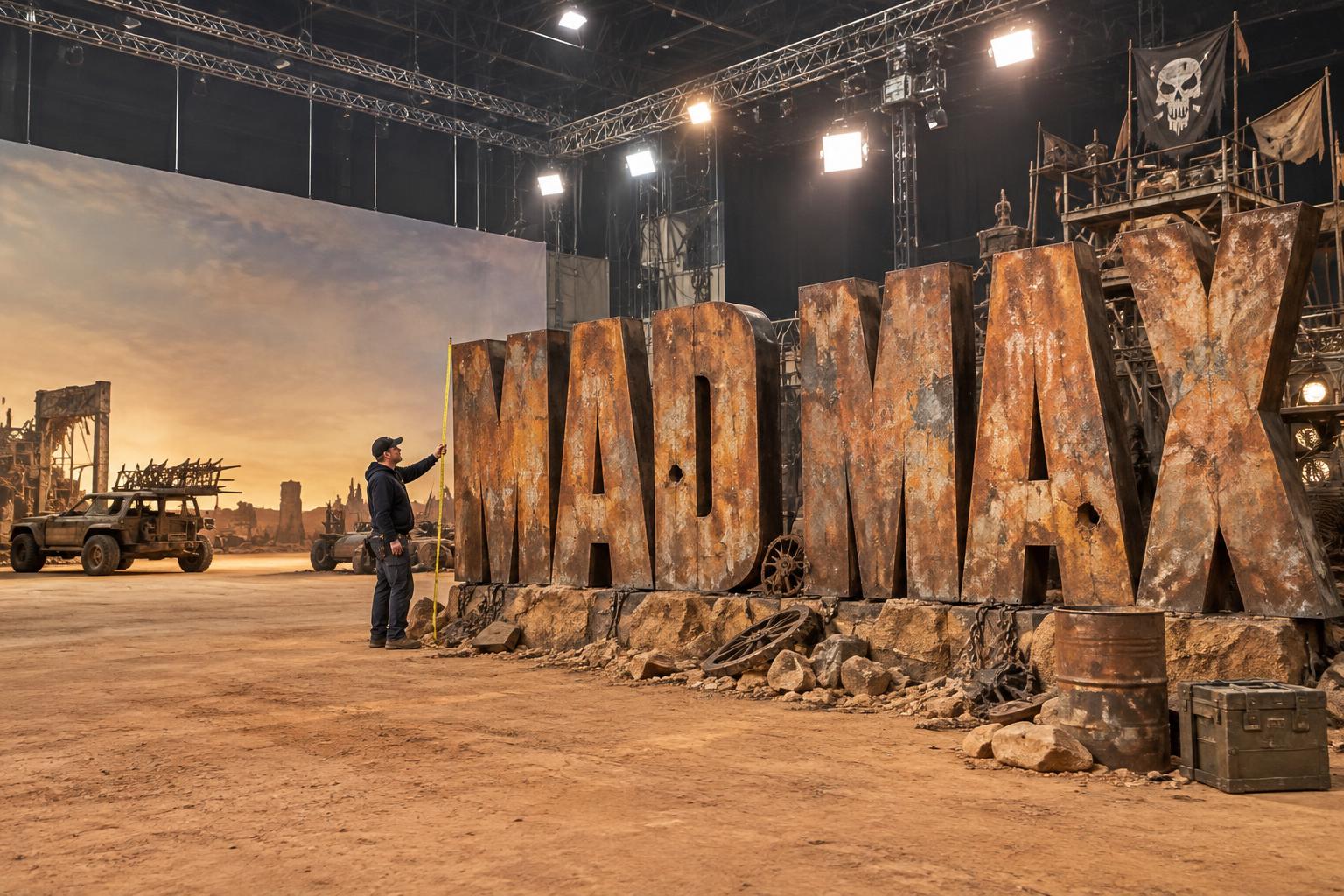
Convincing in the frame. Resolved behind it.
Film Set, Studio & Stage Signs.
Camera-facing sign props, practical illuminated pieces and studio identities. Built around your art direction, shot requirements, handling and production schedule.
Plan my signage projectExplore styles & constructions0208 150 3330Approved project brief
Drawings, samples & sign-off
Considered construction
Materials, finishes & details
Purpose-led detail
Use, interaction & lighting
Site-led specification
Supports, handling & access
A brief beyond the ordinary.
Built for the scene.
Ready for the production.
A sign on a set tells a story. Letterforms, surface detail and illumination need to suit the era, location and camera view, while the reverse, supports and assembly have to work for the production team.
We separate scenic props from operational studio signage and permanent public installations. Share artwork, reference images, shot distance and build-and-strike requirements so materials, visible surfaces and approval samples can be developed around the intended use.
Explore mounting & site approvals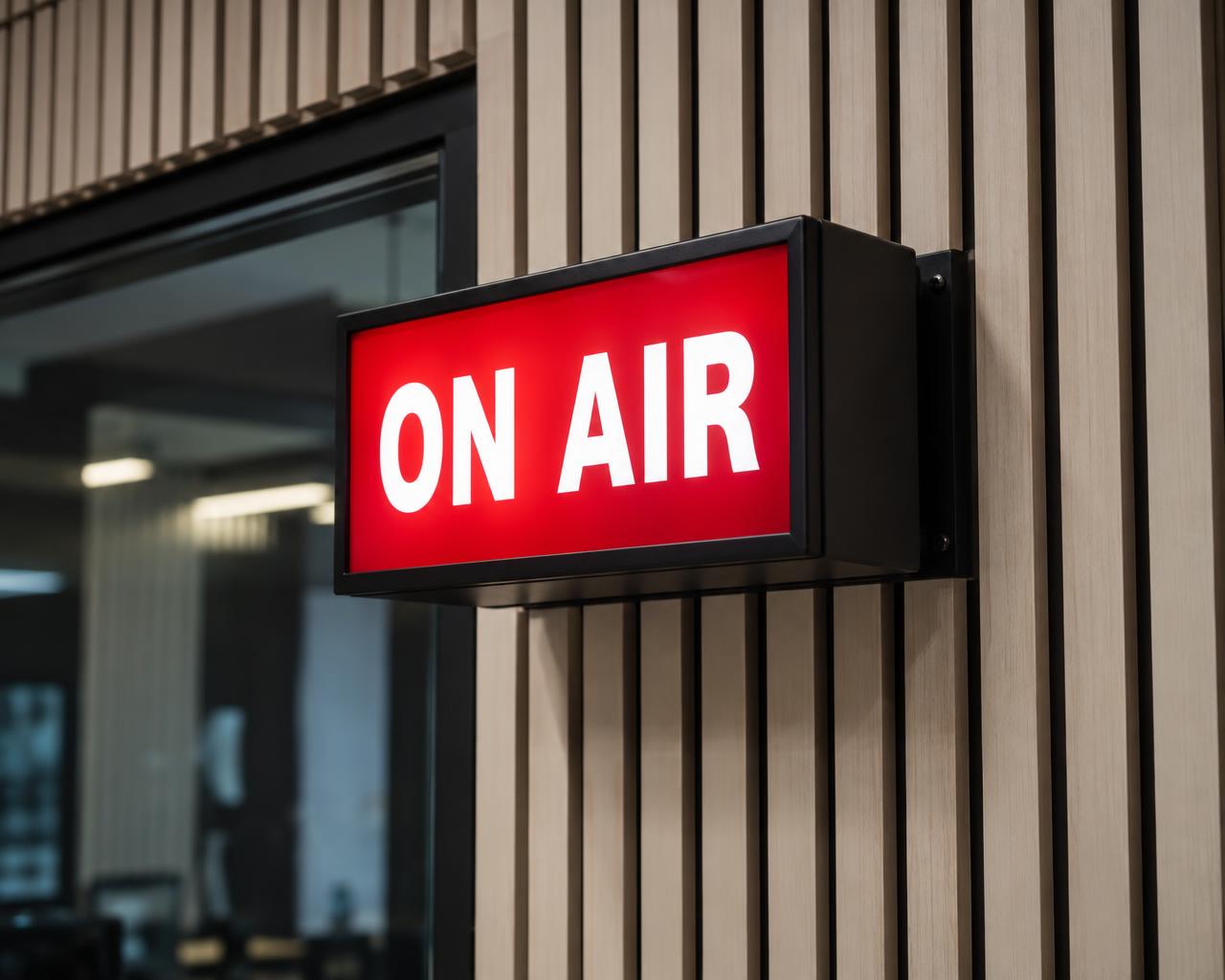
Sign families & applications
Discover signs with a role to play.
From close-up prop detail to practical studio identification. Choose the role before choosing the material or finish.
1 / 6
Set identities & sign propsBelievable detail for the camera.Practical illuminated signsLight that belongs in the scene.Theatre & marquee featuresCharacter, dimension and theatrical light.Studio & operational identitiesClear outside the shot as well.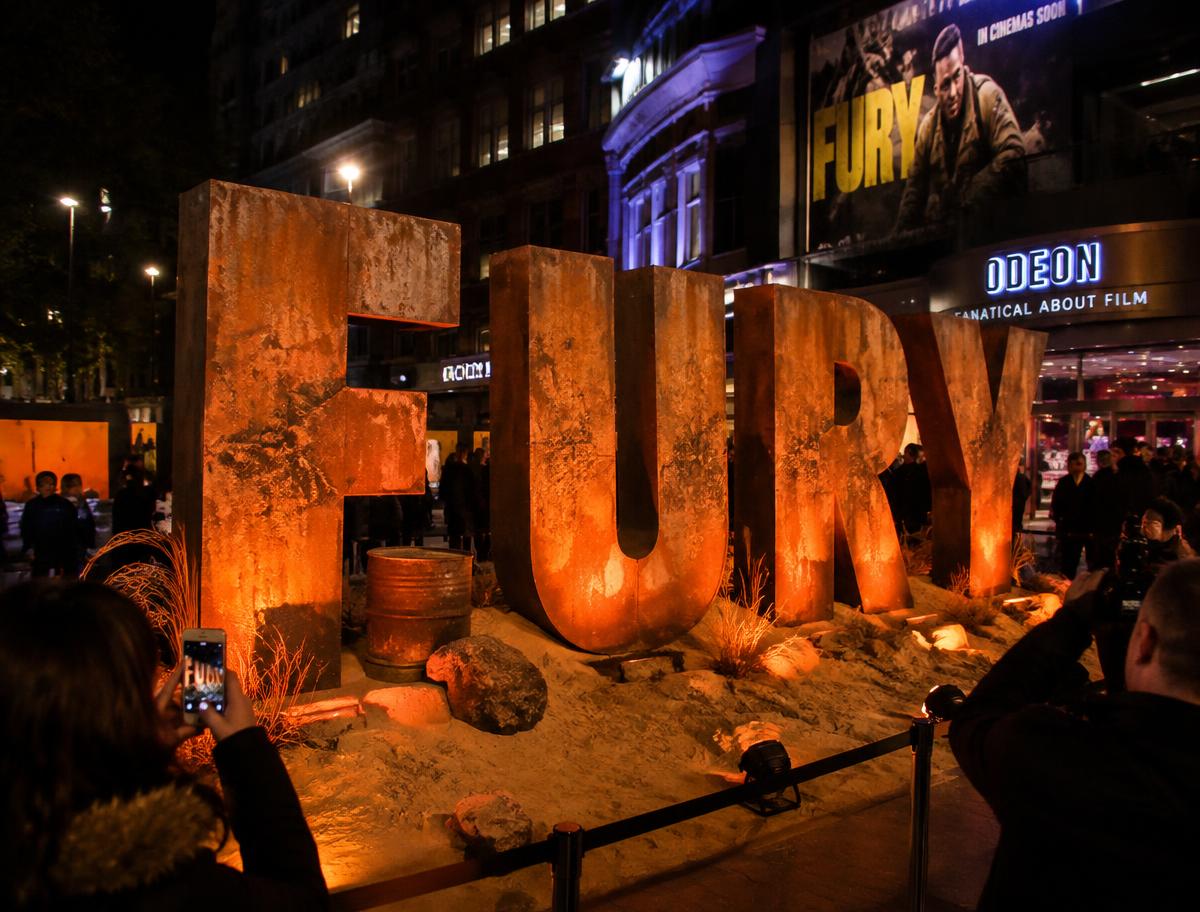 Premiere & production launchesA physical identity for the moment.
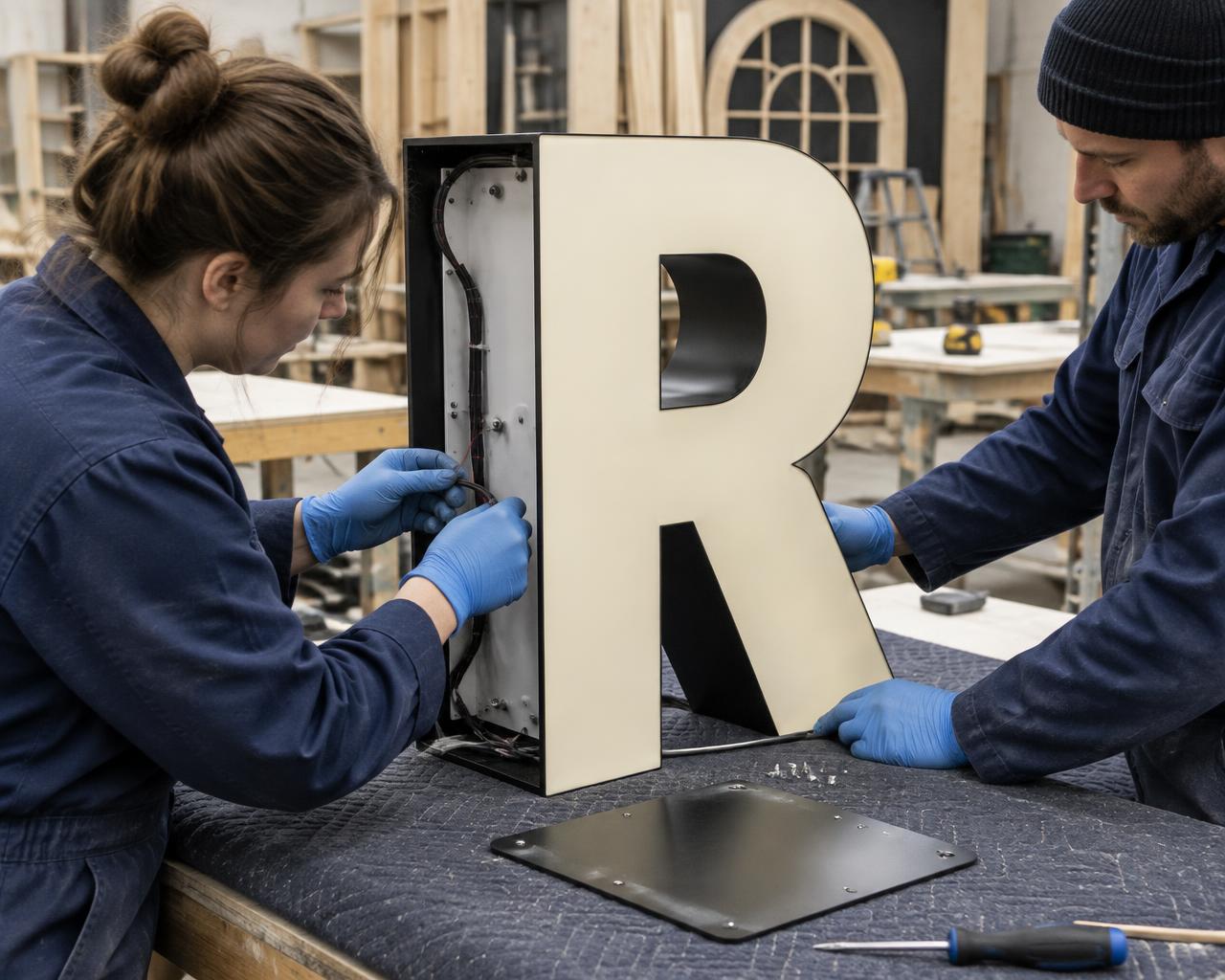 Reusable & touring sign piecesDesigned to build, strike and return.
Film · television · commercial sets
Set identities & sign props
Dimensional signs, storefront identities and scene-specific lettering support the art department’s visual brief. Visible faces, returns and reverse sides are specified around the shot rather than assumed.
- Where it works
- Scenic streets, shopfront sets and interior locations.
- Good for
- Production-specific identities and close-up sign details.
- Our suggestion
- Send the artwork, period references and camera distance. Agree a finish sample and which sides will appear in shot.
Construction & specification notes
- Agree scenic versus permanent construction explicitly.
- Fictional content and use of real brand artwork need production approval.
- A reference photograph is not a verified fabrication drawing.
1 / 6
The difference is in the detail
Crafted for the brand.
Resolved for the space.
Approve it through the camera
Physical samples reveal reflectivity, surface texture and lighting behaviour that a render cannot. Check the intended camera, lighting and shot distance before approving sensitive details.
Design the reverse too
The crew sees the piece from a different angle. Handles, access covers, stable supports and cable routes should be considered alongside the camera-facing finish.
Work with the build and strike
Agree proof deadlines, sample reviews, assembly access and storage before production. Urgent feasibility depends on materials, capacity and the actual scope—not a blanket delivery promise.
Where, when & why
The right sign.
In the right place.
Film & television art departments
Translate scene references and approved artwork into sign props, practical lights and believable material detail.
Explore this approachBroadcast & recording studios
Coordinate room identities and separately scoped practical status displays with the facility’s control and electrical teams.
Explore this approachTheatre, premieres & touring work
Balance visual impact with transport, rigging review, repeated handling and venue-specific build-and-strike requirements.
Explore this approachBefore we make it
Filming, Studio & Stage Signs FAQs.
01Can you work from an art department drawing?
Share drawings, artwork, reference images, dimensions and finish requirements. We review construction and sample approvals against the intended scene and handling conditions.
02Can a sign match a historical period?
Period references can inform lettering, casing and surface treatment. Approve a physical finish sample; we do not claim a reference image guarantees an exact historical reproduction.
03Are illuminated signs flicker-free on camera?
Camera behaviour depends on the LED, driver, controls, frame rate and shutter settings. A representative sample must be tested through your setup. We do not promise universal flicker-free operation.
04Can you make lightweight scenic signs?
Construction can be reviewed for handling and scenic use. Weight savings must not undermine stability, rigging or venue requirements; permanent outdoor and scenic specifications differ.
05Do you provide rigging?
Rigging scope and responsibility must be agreed with the production and competent specialists. Fabricating a prop does not automatically include approval of overhead supports or installation.
06Can signs tour or be reused?
Yes, where construction, connectors, packaging and maintenance are developed for repeated use. Share transport sizes and build-and-strike expectations early.
07Can you take urgent production requests?
Send the required date, approved artwork and scope. The studio will confirm feasibility and available capacity; dates are not booked by sending a brief.
08Who approves location signage?
Production approves the artwork and placement, but public-facing, highway or building installations may need separate authority, venue or landowner approval. Props are not automatically authorised road signs.
A tailored project brief
Let’s resolve
your signage project.
Share art direction, artwork, shot distance, visible sides, camera settings, practical lighting needs and your build-and-strike dates.
Project-specific specification notes
- Camera tests & controls
- Agree frame rate, shutter settings, dimming range, diffusion and colour requirements. Test the selected driver and control combination through production’s camera; no universal flicker-free claim is made.
- Rigging, materials & production duties
- Weight, supports, lifting and temporary construction require competent production review. Venue fire requirements depend on the actual material evidence and assembly. HSE guidance explains how CDM duties may apply to entertainment construction.
- Power & practical lighting
- White LED options include warm 2700–3000K, neutral around 4000K and cool 5000–6500K, subject to the selected system. Agree drivers, controls, cable routes and service access. Building mains supply, isolation, final mains connection and certification are the responsibility of your qualified electrician, not our general fabrication package.
- 01Review art direction, shot requirements and artwork
- 02Approve material and camera-tested lighting samples
- 03Agree assembly, power and production delivery scope