
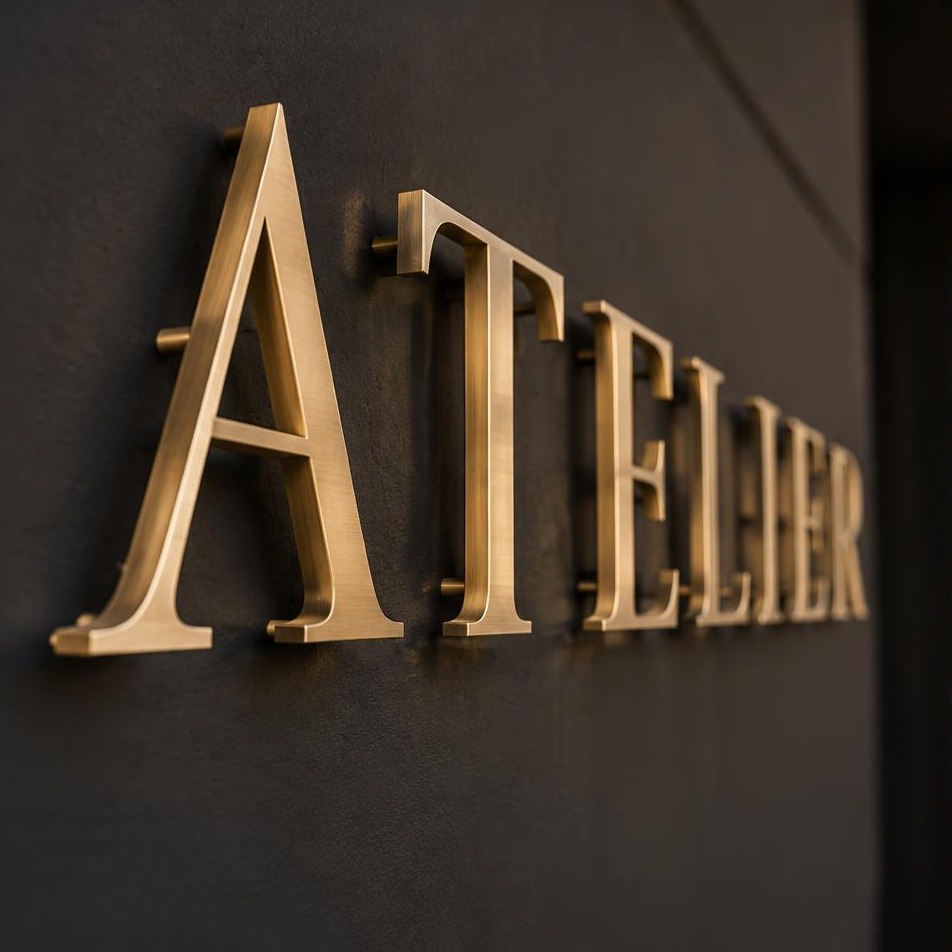
 Brushed & satin brassWarmth with a controlled grain.
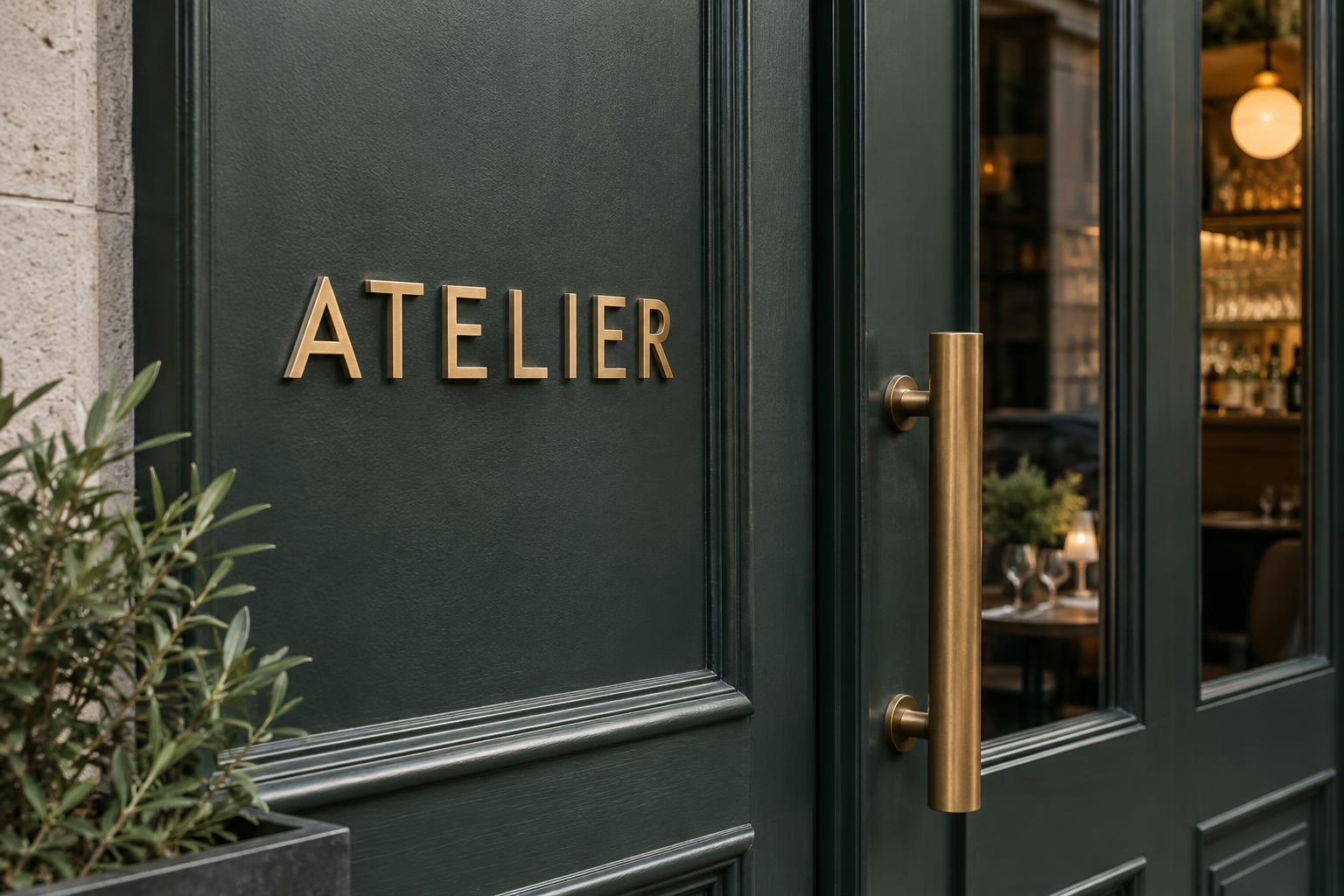
Real character. In the surface and the detail.
Bespoke Metal Signs & Patinas.
Brass, bronze, copper, stainless and blackened metal appearances for distinctive lettering and architectural identities. Sample-led finishes, considered edges and a clear maintenance brief.
Plan my signage projectExplore styles & constructions0208 150 3330Approved project brief
Drawings, samples & sign-off
Considered construction
Materials, finishes & details
Purpose-led detail
Use, interaction & lighting
Site-led specification
Supports, handling & access
A brief beyond the ordinary.
The material makes
the first impression.
Metal brings depth and character to a sign, but “brass” or “bronze” is not a complete specification. Base metal, grain direction, patination, coating and the light in the space all change the appearance.
We develop lettering and sign details around an approved physical finish sample. Solid metal, plated surfaces and coated metallic effects must be distinguished clearly, with variation, weathering and cleaning expectations agreed for the intended location.
Explore mounting & site approvals
Sign families & applications
Discover a finish with intention.
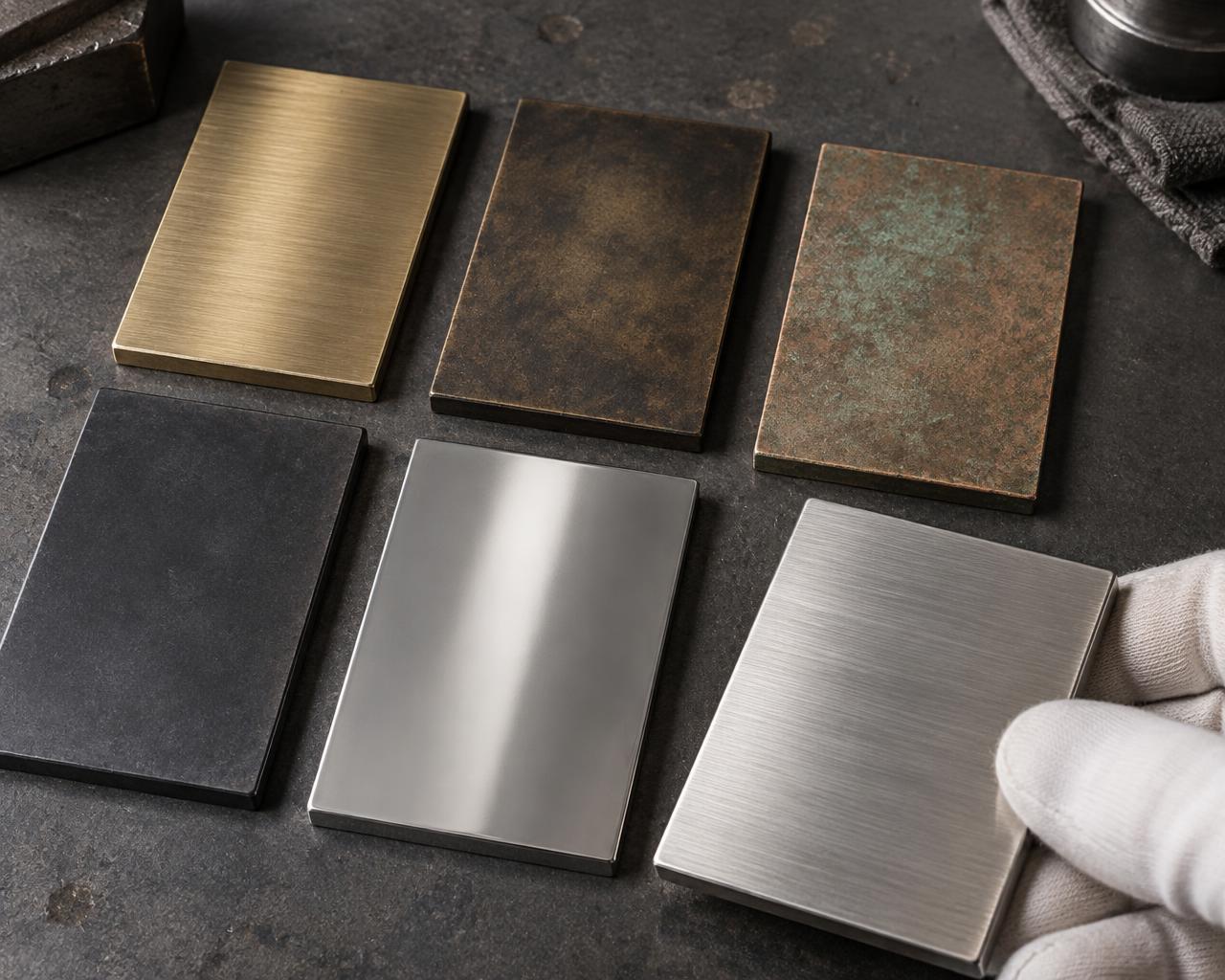
Explore six finish directions, then review a physical sample. Photographs show appearance ideas—not a guaranteed colour, alloy or production finish.
1 / 6
Brushed & satin brassWarmth with a controlled grain.Bronze & aged patinasDepth, variation and a darker tone.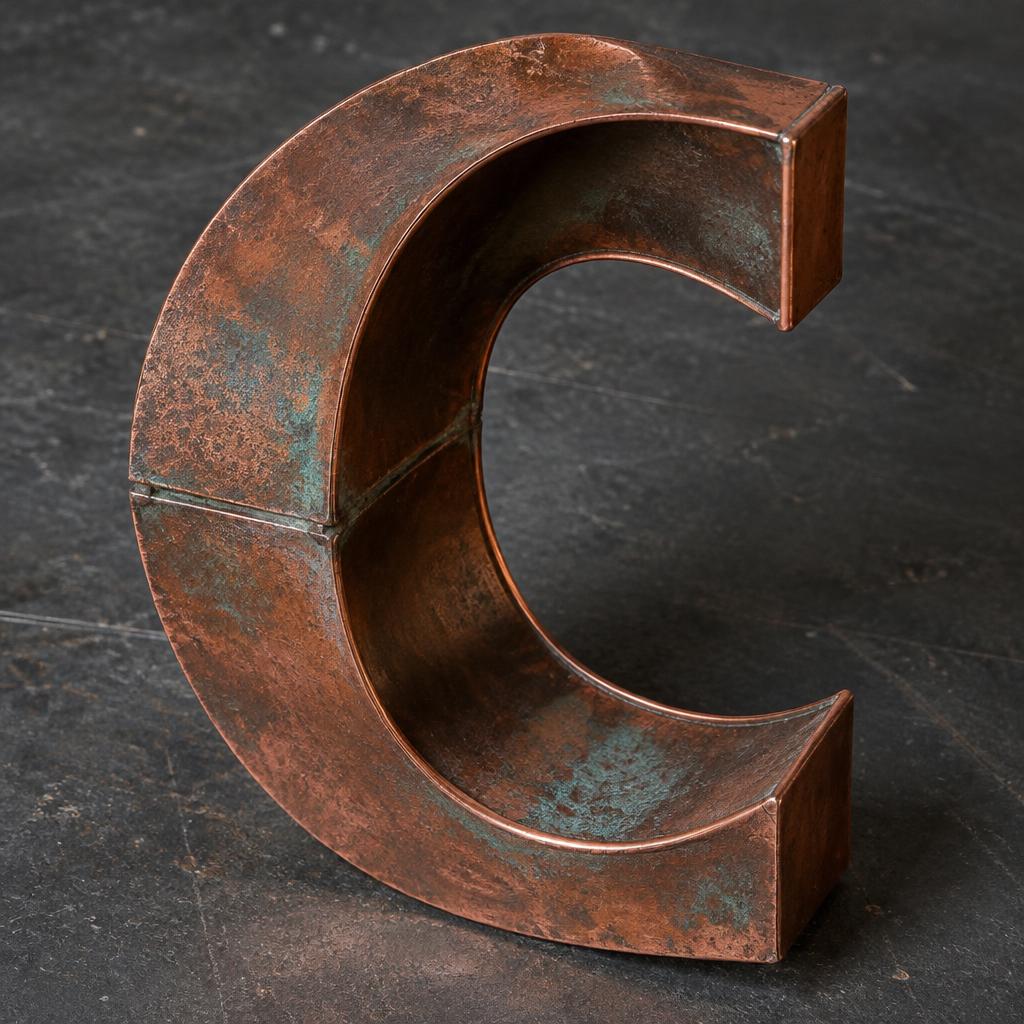 Copper & weathered surfacesA finish that may continue to evolve.
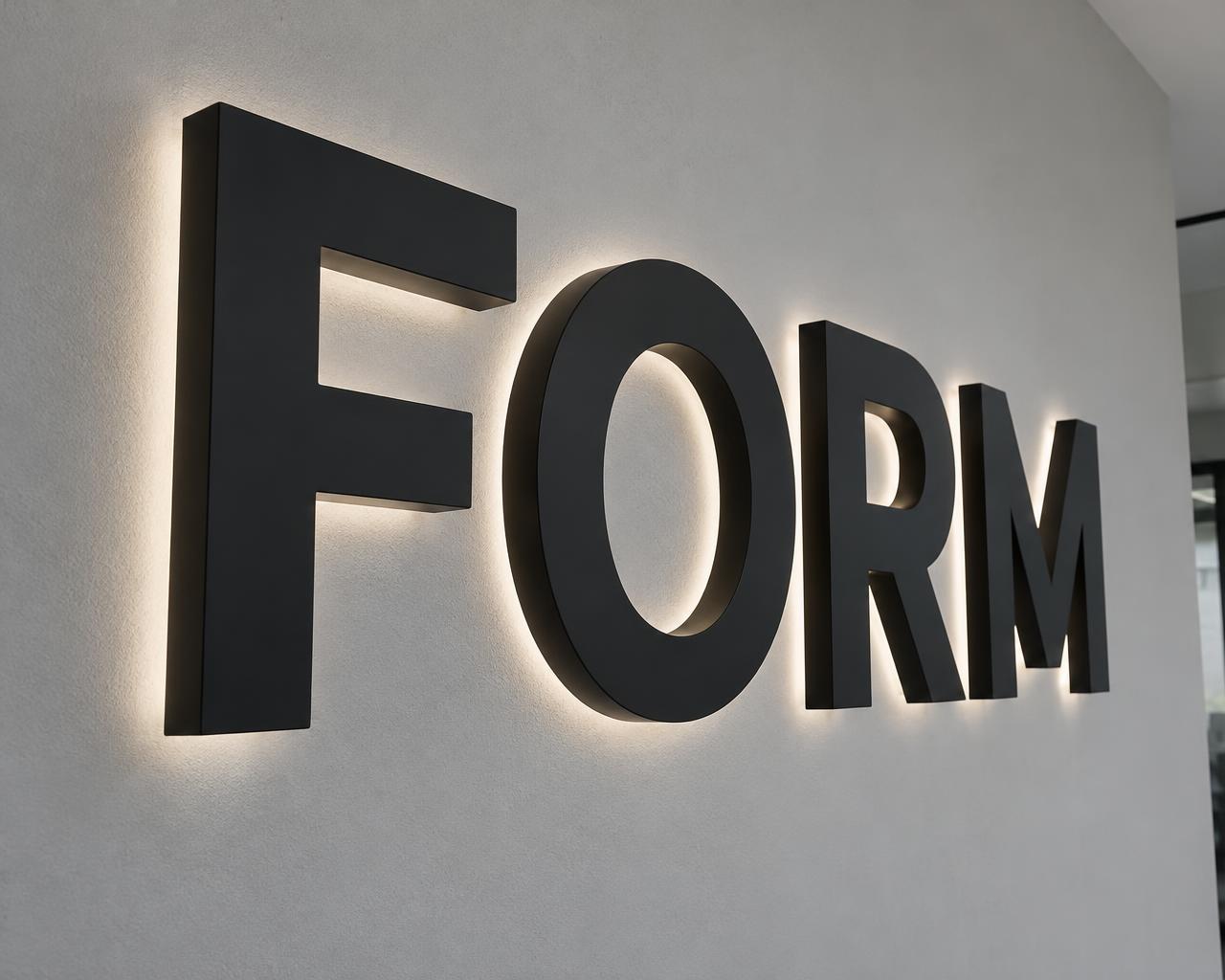 Blackened & dark metal finishesQuiet contrast. Strong definition.
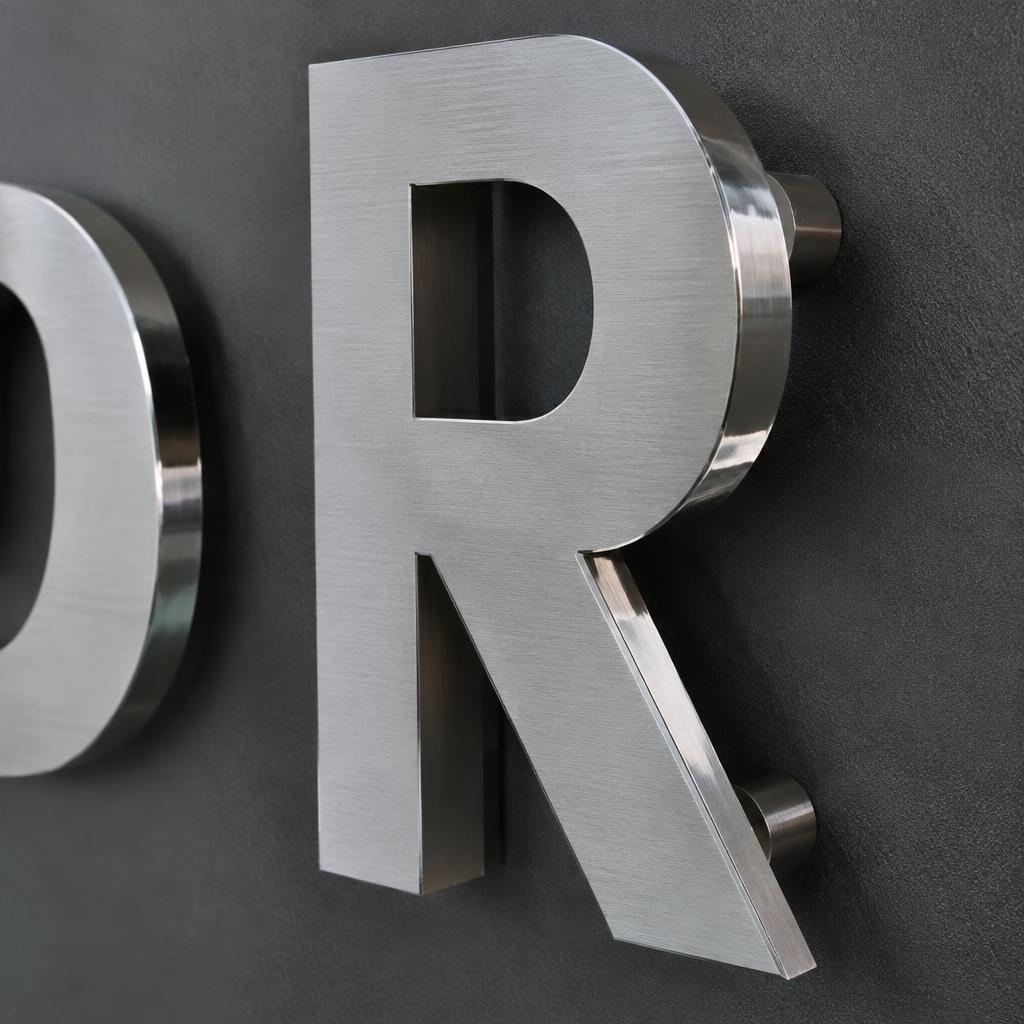 Brushed & polished stainlessA crisp contemporary identity.
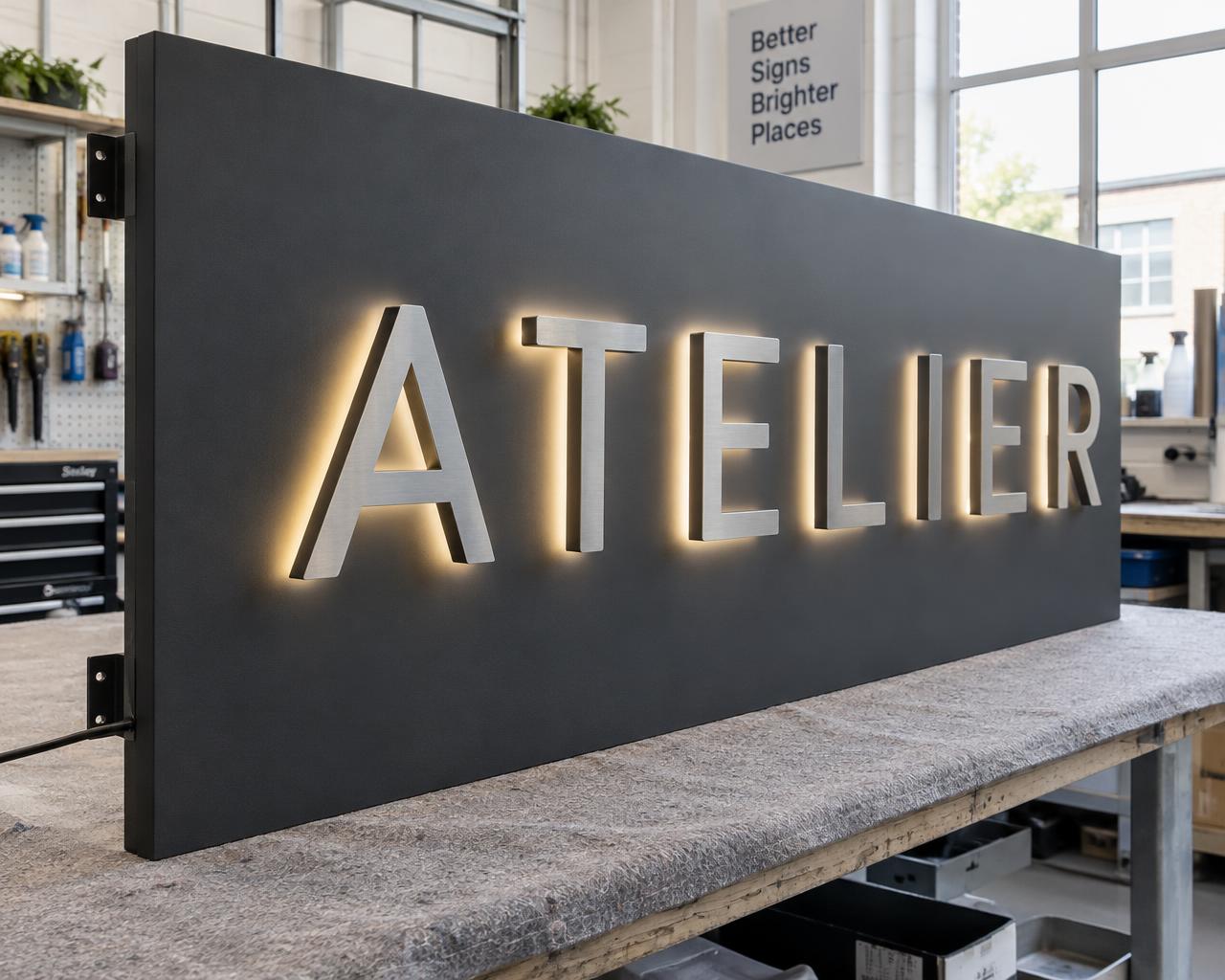 Mixed finishes & illuminated detailMaterial by day. Presence after dark.
Restaurants · hotels · architectural interiors
Brushed & satin brass
Directional satin brass gives lettering a tactile material character with less reflection than a mirror polish. Grain direction, edge treatment and protection shape the final appearance.
- Where it works
- Entrances, reception identities and premium interior lettering.
- Good for
- Warm material detail within restrained architectural spaces.
- Our suggestion
- Compare the sample under the site lighting. Agree grain direction across faces and any visible returns.
Construction & specification notes
- Specify genuine brass versus a brass-effect coating.
- Unprotected brass can tarnish and mark with handling.
- Protective coatings change appearance and need a maintenance brief.
1 / 6
The difference is in the detail
Crafted for the brand.
Resolved for the space.
Name the substrate, not just the colour
Solid brass, a plated component and a brass-effect coating can look related while behaving differently. The agreed specification identifies the actual material and finish process.
Approve a sample range
Patina, brushing and hand finishing carry variation. Review representative samples under the real lighting and agree what level of variation is part of the design.
Resolve edges and material junctions
Returns, joints, fixing interfaces and adjacent surfaces can change the effect of an otherwise beautiful face. Review visible edges, compatible fixings and cleaning access.
Where, when & why
The right sign.
In the right place.
Restaurants & hotels
Coordinate entrance identities, room plaques and material details with hospitality lighting and realistic cleaning needs.
Explore this approachRetail & flagship interiors
Develop a consistent finish family across dimensional brand lettering, plaques and bespoke display accents.
Explore this approachArchitectural & heritage-led spaces
Review patinated appearances alongside the existing materials, approval requirements and the intended ageing behaviour.
Explore this approachBefore we make it
Luxury Metal Finishes & Patinas FAQs.
01Are brass-effect signs made from real brass?
Not necessarily. Genuine brass, plated components and metallic coatings are different specifications. The quote and sample should identify the actual substrate and treatment.
02Will patinated letters look identical?
Not always. Hand-developed surfaces can vary in tone and texture. Approve representative samples and acceptable variation before the full set is produced.
03Can patinated metal be used outdoors?
Suitability depends on the base material, treatment, exposure and maintenance. Exterior weathering and runoff must be reviewed; an interior sample is not an outdoor performance guarantee.
04Can you match an existing metal finish?
An existing sample or component helps us review a matching direction. Ageing, light and batch variation can prevent an exact match; approve physical samples rather than screen colours.
05Is stainless steel maintenance-free?
No. Grade, exposure, contamination and cleaning affect its appearance and performance. Coastal or demanding environments need a considered material and maintenance specification.
06Can metal letters be illuminated?
Halo or other separately specified lighting can be integrated where appropriate. The wall surface, stand-off and light output affect the result; approve a material-and-light sample.
07How should a finished sign be cleaned?
Use the care instructions agreed for the actual finish. Abrasive cleaners, solvents or polishing products can alter patinas and coatings; do not assume one method suits every metal.
08Can we approve a sample before ordering?
A sample is a useful approval stage for sensitive finishes. Agree the size, finish range, cost and programme with the studio before production.
A tailored project brief
Let’s resolve
your signage project.
Share the sign artwork, base material preference, finish references, indoor or exterior exposure, lighting and cleaning expectations.
Project-specific specification notes
- Variation, protection & weathering
- Patination is sample-led, not a promise of identical pieces. Agree any lacquer or protective treatment, exposure and whether the surface is intended to evolve. There is no universal maintenance-free metal finish.
- Substrate, fixings & adjacent materials
- Specify the actual base metal, finish and mounting assembly. Dissimilar metals, runoff, cleaning chemicals and visible edges need review. Exterior and coastal applications require a separate exposure assessment.
- Optional halo & architectural lighting
- White LED options include warm 2700–3000K, neutral around 4000K and cool 5000–6500K, subject to the selected system. Agree drivers, controls, cable routes and service access. Building mains supply, isolation, final mains connection and certification are the responsibility of your qualified electrician, not our general fabrication package.
- 01Review the material, artwork and intended setting
- 02Approve physical finishes and acceptable variation
- 03Resolve edges, mounting and care instructions